
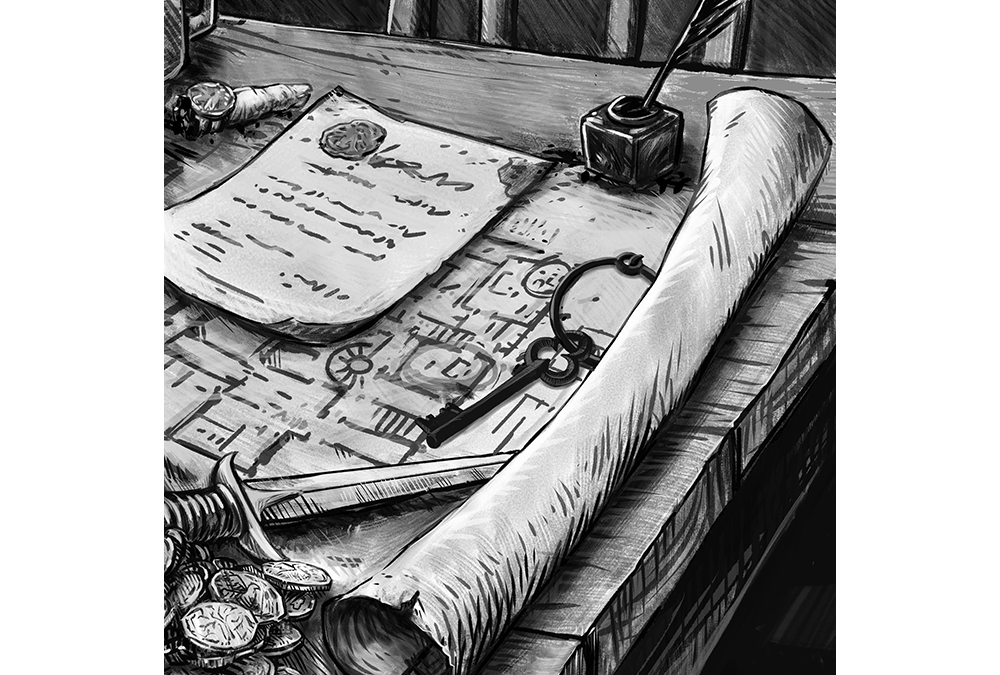
I’ve been writing up the Whisper Killings scenario which has been interesting and a lot of fun. So the way I write playtest and then rewrite scenarios for other people to run is as follows:
- I write the scenario using the playsheet for myself. It’s how I would write my notes for any home game
- I run the scenario for my group and while I’m running it I take notes, mostly for the things that the group is inventing on the fly, the group includes me. I might want to include these things later.
- As a note, it’s always so interesting to me the things I see while I’m playing the game that I don’t while I’m writing up a scenario.
- I take my notes and my play sheet and punch them into Google Docs so I have what I would consider a decent outline for myself
- I write the scenario with the intention for other people to read and use it in their games.
Sometimes this is easier and sometimes it’s harder. For the Whisper Killings I also added a side situation which has complicated my writing process. The Whisper Killings is supposed to be part of a campaign. I don’t want the campaign to just be scenario 1 – 7 and done. I want to make sure there are other smaller things that may or may not be related to the main situation for the characters to deal with and can impact their neighborhood. In playing around with that idea I have a type of content, side situations, that I’m still trying to figure out how to insert into a campaign. I’m hoping by the middle of November I’ll have a first attempt put together that I can share with you all.
I’ve also started running the next scenario, The Shadow Wards Theft. It’s another investigation which has a potential dangerous exploration in the middle of it. I also have the side story still running from the first scenario since the antagonist of the story got away while the party dealt with the zombie bite one of the characters received. We did the downtime part of play which reaffirmed for me that it’s an essential part of the game. It allows for time to pass between scenarios. We’re doing a 2 month time jump. It gives the PCs a chance to do things and advance their characters in an alternate way both mechanically and personally but not infinitely. They have a set amount of points to spend on their activities. It also allows for longer term projects. One character is looking into the mystery of their missing brother. I put that every 25 downtime they spend on the investigation they’ll get a lead that will turn into a side situation. Once again this is nothing new, they’re just project clocks from games like Blades in the Dark but that tool/technique is so good I just added it into the game in a way that made sense to me.
The other thing that came up was upkeep, these folks live in a city and I wanted to make sure that it feels like living in a city and classism is part of the game so paying rent, for food, and to upkeep your gear is important. Once they realized they didn’t make enough money from the first scenario, and not having that cash can lead to negative tags and potentially conditions, they spent a bunch of their downtime just working which made them enough coin, and a lot of coin in some cases, to pay their upkeeps. They actually enjoyed the process since all my downtime spends come with a short scene to show what a moment of that downtime looks like. It’s a little like a montage of slice of life moments as we get to the next scenario. Does a lot to show off what’s important to the characters outside of these tenser moments and what the city is like. Our private eye said she did a bunch of smaller jobs but the most notable one was tracking down a missing pet ferret named Chubs.